
What if the next step in growing a YouTube channel wasn’t publishing more videos, but making the ones you’ve already created accessible to a new audience?
Many creators spend years building a community, refining their formats, and developing a library of content. However, there’s a growth opportunity that often gets overlooked: reaching people who consume content in another language.
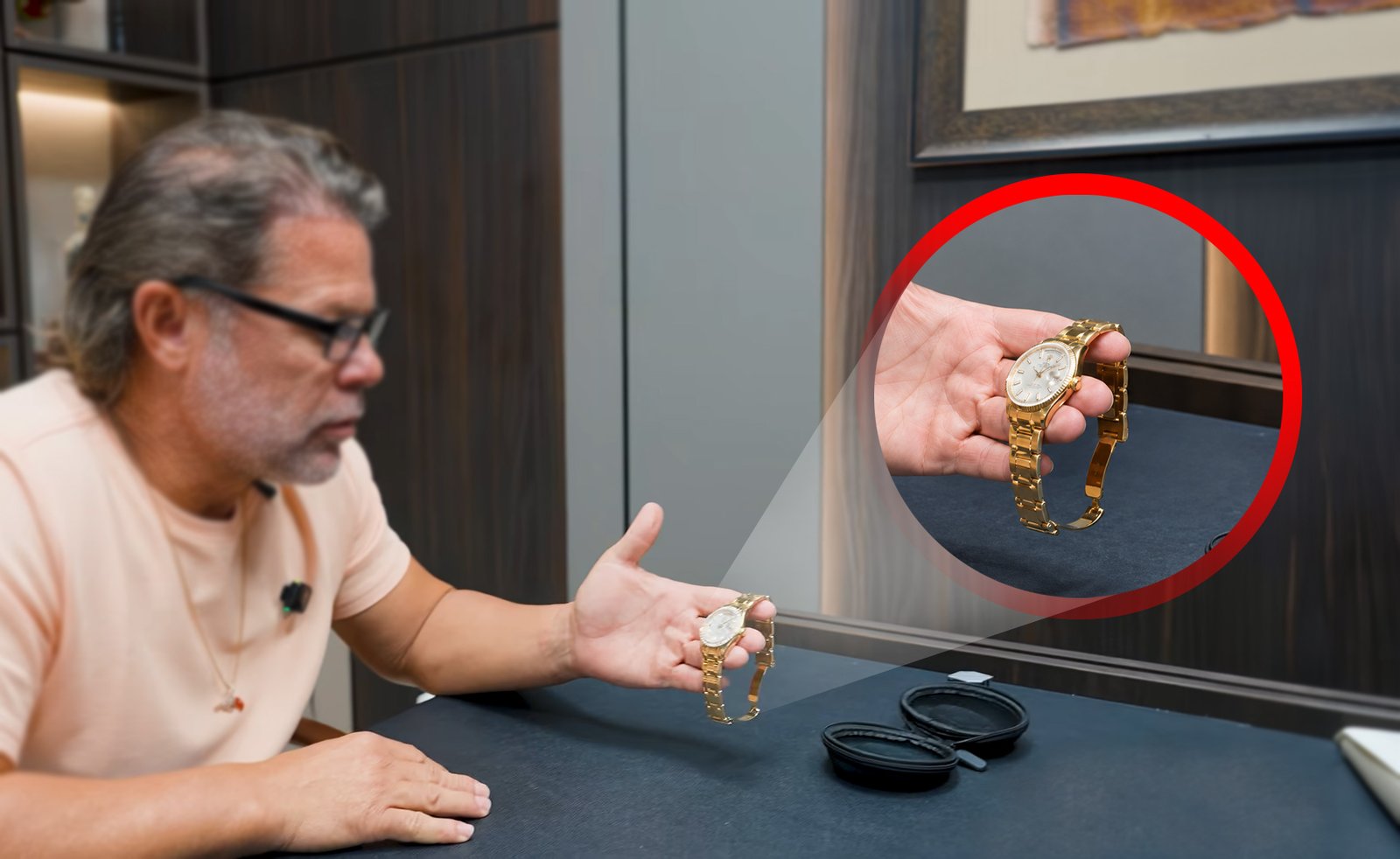
CRM Jewelers is an interesting example of this opportunity. The Miami-based luxury watch and jewelry business established a presence on YouTube in English before developing a dedicated channel for Spanish-speaking audiences.
Its experience highlights an increasingly relevant idea for creators: localizing content can open up a new market without having to start producing everything from scratch.
CRM Jewelers: Two Channels, Two Languages, and a Global Audience
CRM Jewelers publishes content about luxury watches, jewelry, buying and selling, and business negotiations. Its approach combines information about high-end products with real-life business situations and episodes of its CRM Life series.
The original English-language channel was created on July 17, 2013. The CRM Jewelers en Español channel, meanwhile, was created on January 31, 2020, according to public YouTube statistics compiled by SubSub.
The difference between these dates matters. The brand didn’t start its YouTube journey in Spanish. It first established its presence in English and later launched a dedicated channel for Spanish-speaking audiences.
The Numbers Behind the Spanish-Language Channel
According to the CRM Jewelers en Español channel profile on SubSub, checked on October 16, 2026, the channel has approximately:
- 798,000 subscribers.
- 880.5 million lifetime views.
- More than 2,270 published videos.
- Channel creation date: January 31, 2020.
These figures represent a snapshot of the channel at a specific point in time and may change.
The original English-language channel also has a substantial audience. According to its SubSub profile, it has approximately 878,000 subscribers and 641.6 million lifetime views.
The comparison reveals something interesting: the Spanish-language channel has accumulated more total views than the original English-language channel, despite having fewer subscribers.
This doesn’t prove that language was the cause of its growth. The two channels have different creation dates, video counts, and histories. We also don’t have access to their revenue or relative profitability. However, the figures show that a content strategy in another language can build an audience at considerable scale.
Why Can Creating Content in Another Language Expand Your Reach?
Language influences whether people can discover, understand, and enjoy a video. Content can be excellent, but if viewers don’t understand the language it’s presented in, there’s a barrier to becoming regular viewers.
Dubbing helps reduce that barrier and unlock the potential of content that has already been produced.
In CRM Jewelers’ case, the topics it covers internationally recognized watches, jewelry, pricing, authenticity, and negotiations appeal to audiences beyond a single market. Adapting this content into Spanish makes it accessible to viewers who don’t necessarily consume content in English.
The opportunity isn’t simply about translating words. It’s about creating a natural viewing experience for people who prefer to listen to and consume content in their own language.
1. Reach Audiences That Were Previously Out of Reach
An English-language channel can attract viewers from many countries, but that doesn’t mean everyone in its potential audience understands English.
A Spanish-dubbed version can make the same content accessible to viewers in Spain, Mexico, Argentina, Colombia, and other Spanish-speaking markets.
The goal isn’t to replace the original audience, but to expand the content’s distribution potential.
2. Make the Most of Existing Content
Creating a video involves research, planning, filming, editing, and publishing. In many cases, videos also remain relevant long after their initial release.
When creators have an established content library, localization allows them to explore a new market while building on work they’ve already completed.
Instead of producing a second version from scratch, they can adapt the script, dub the voices, adjust the editing, and prepare the necessary assets to publish the content in another language.
This approach is particularly interesting for channels with extensive catalogs and content that retains its value or appeal over time.
3. Build a Second Growth Channel
CRM Jewelers’ experience also raises a strategic question: should creators establish a separate channel for each language, or add multiple audio tracks to a single channel?
There isn’t a universal answer.
A dedicated channel allows creators to develop a distinct editorial identity, adapt titles and thumbnails, and build a community around a specific language. However, it also means managing publishing schedules, analytics, and audience engagement across multiple channels.
The alternative is YouTube’s multi-language audio feature, which allows creators to offer multiple audio tracks on the same video. This makes it possible to centralize views and manage content through a single channel.
The right choice depends on the creator’s goals, resources, and distribution strategy. CRM Jewelers demonstrates that its Spanish-language channel has attracted a substantial audience, but its experience doesn’t prove that separate channels are always the best approach.
YouTube Is Also Investing in Multilingual Content
This opportunity doesn’t depend solely on creators’ decisions.
YouTube has introduced tools that make distributing videos in multiple languages easier. One of these is multi-language audio, which allows creators to add dubbed audio tracks to new or previously published videos.
In September 2025, YouTube announced that it was expanding the availability of this feature to millions of creators. In that announcement, the platform shared a relevant statistic: creators who added multi-language audio tracks generated, on average, more than 25% of their watch time from languages other than their primary language.
This figure reflects aggregate results from creators using multi-language audio. It isn’t a guarantee of results for every channel, nor is it a statistic specific to CRM Jewelers.
YouTube also explains that translated titles and descriptions can help videos appear in search results in other languages.
You can find more information in the YouTube Blog’s article about multi-language audio and the official guide to adding multi-language features to videos.
The takeaway is clear: audiovisual localization has become an established tool for developing international audiences.
Professional Dubbing: Much More Than Translating a Video
For this strategy to work, simply replacing one voice with another isn’t enough.
A good adaptation must preserve the meaning, pacing, intent, and personality of the original content. It also requires careful audio editing and appropriate synchronization with the visuals.
An overly literal translation can sound unnatural, lose expressions specific to the original language, or fail to connect with the target audience.
A professional dubbing workflow typically involves several stages:
- Translation and adaptation: Preparing a natural-sounding script for the target audience.
- Voice performance: Selecting voices that convey the personality and intent of the original.
- Audio editing: Integrating dialogue, music, ambient sounds, and sound effects.
- Video editing: Adapting on-screen text and ensuring proper synchronization.
- Publishing and optimization: Preparing titles, descriptions, thumbnails, and other assets for the new market.
The goal is to create an experience in which viewers can enjoy the content without feeling that they’re watching an improvised or disconnected version of the original.
What Can Creators Learn From This Case?
The main lesson from CRM Jewelers isn’t that every channel should launch a Spanish-language version. It’s that language deserves to be considered a strategic variable in audience growth.
Before investing in new productions, creators can evaluate the opportunities already available within their existing content libraries.
For example:
- Analyze the current audience. Review viewer locations, available language options, and signs of international interest.
- Identify content with potential. Prioritize videos that have already attracted viewers or remain relevant over time.
- Test a market. Start with a selection of videos and evaluate their performance before localizing the entire catalog.
- Choose a distribution strategy. Compare the benefits of a dedicated channel with those of multi-language audio.
- Measure the results. Track views, watch time, audience retention, subscriber growth, and financial results when available.
This process helps creators make decisions based on real data instead of assuming that every piece of content will perform equally well in every language.
An Opportunity to Take Content Further
CRM Jewelers’ growth in Spanish is an interesting example of how a brand can develop an additional audience around an existing content strategy.
Public statistics don’t allow us to attribute all of this growth to dubbing or determine the financial impact of the strategy. However, they show that the Spanish-language channel has reached a considerable scale and that localization is worth considering as part of an international growth strategy.
For creators who already have a library of videos, the question may be simpler than it seems: how many more people could enjoy that content if it were available in their language?
At Plugo Studio, we work with this opportunity in mind. We help creators and businesses adapt their videos for Spanish-speaking audiences through translation, dubbing, audio and video editing, and channel management.
Because sometimes, the next growth opportunity doesn’t come from producing more content, but from helping the content you’ve already created reach further.
Want to explore your channel’s potential in Spanish? Discover Plugo Studio’s services and learn how audiovisual localization can help you reach new audiences.